


















DRAM chip prices in the global market have been rising continuously, and this is one of the main reasons modern smartphones have become inevitably more expensive. If you follow tech news or plan to buy a new smartphone soon, you may have noticed that starting prices for flagship and mid-range phones have increased compared with the past 2–3 years. This phenomenon is not solely due to manufacturers trying to raise profits; it stems from a major disruption in the semiconductor supply chain as the industry undergoes significant change.
In an era where artificial intelligence (AI) plays an important role in daily life, new smartphones are being developed to support on-device AI or local AI processing. These processes require large, high-speed random access memory (RAM) to handle massive data processing. As global demand for DRAM chips rises sharply for use in both smartphones and AI servers, while fabrication capacity remains limited, basic economics of supply and demand take effect. Component costs rise, and those increased costs ultimately fall on the end consumer. Understanding the pricing structure and the crisis helps us better assess technology market direction and make smarter IT purchasing decisions.
📈 Behind the chip shortage: demand outpacing production capacity
The crisis that pushed chip prices higher began after the pandemic, when major memory-chip manufacturers such as Samsung, SK Hynix, and Micron reduced production to avoid oversupply and prevent prices from collapsing. The situation reversed when Generative AI surged: tech giants invested heavily in building AI data centers and servers that require high-performance memory (HBM - High Bandwidth Memory) in large quantities.
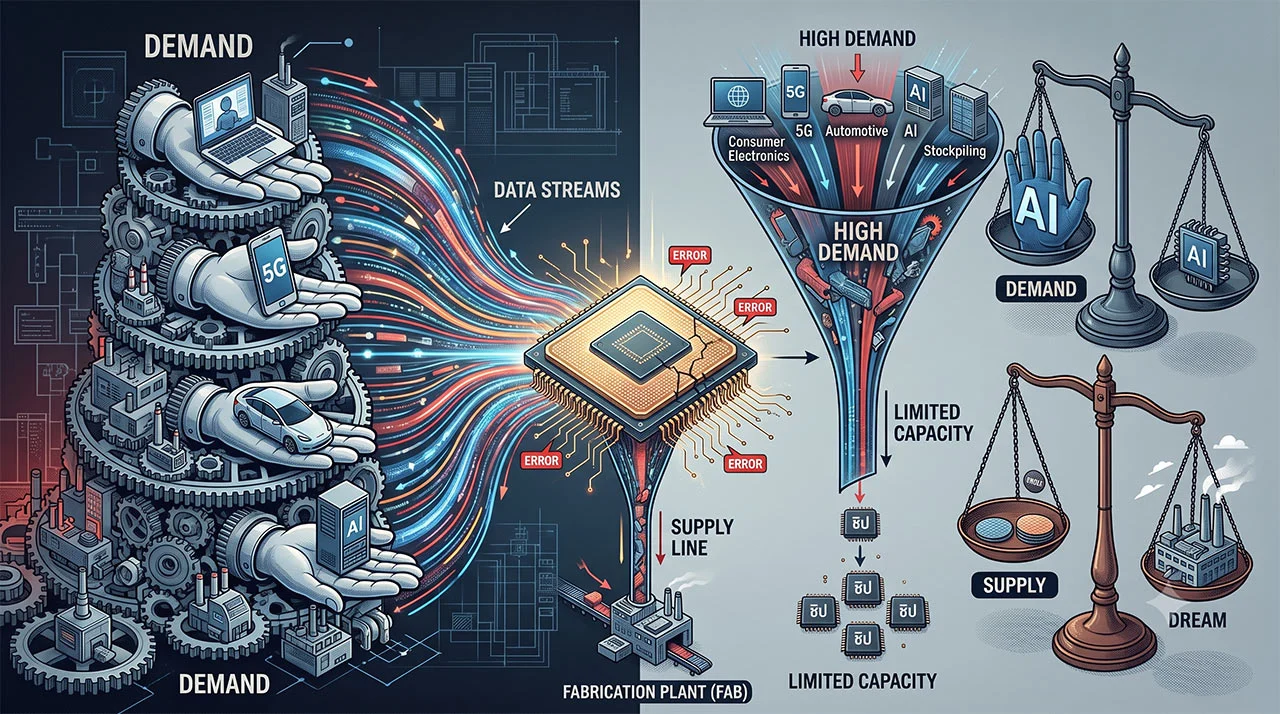
When manufacturers shift focus to producing HBM, which commands higher market value and margins, production lines for LPDDR DRAM (Low-Power Double Data Rate) used in smartphones and general-purpose computers are naturally reduced. With smartphone supply constrained but phone brands still competing for parts to meet product launch schedules, strong buying pressure emerges and chip suppliers can raise wholesale prices steadily.
💡 Direct impacts on consumers and smartphone brands
The effect of rising chip prices goes beyond the sticker price of phones; it also influences product design strategies across brands. Trends we can expect in the smartphone industry include:
- Memory specs held steady: Mid-range phone makers may choose not to increase standard RAM capacity (for example keeping it at 8GB instead of moving to 12GB) to keep retail prices within reach.
- AI features tiered: Flagship phones with large RAM (12GB–16GB) will see much higher prices and may become the gatekeepers for access to full advanced AI features.
- Repair costs rise: Mainboard parts with embedded memory will become more expensive to repair or replace.
Analysts at leading technology market research firms estimate that unless chip production can scale to balance AI and smartphone demand, the trend of rising costs could persist at least through the end of next year.

❓ Frequently asked questions (FAQs) about smartphone prices and DRAM chips
Q1: What is a DRAM chip and why does it matter for smartphones? A1: DRAM stands for Dynamic Random Access Memory, commonly called RAM. It is temporary memory that a smartphone uses to hold data while apps are running. The more complex the apps, the more advanced camera processing, or the more AI features a device has, the greater the RAM capacity required to keep the experience smooth and responsive.
Q2: When will chip prices fall again? A2: Experts predict prices may stabilize once major manufacturers bring new fabs online or optimize existing production lines to increase efficiency, which could take at least 1–2 years. Rapid price drops in the short term are unlikely.
Q3: How should consumers adapt or decide when to buy a smartphone right now? A3: If your current phone still performs well, software updates and battery care to extend its life are the most economical choices. If you must buy now, consider models with sufficient RAM for the next 2–3 years (8GB or more is recommended for Android) and wait for promotional periods or festivals to get better value.
📌 Summary: The outlook for rising smartphone prices and DRAM in the future
In summary, DRAM chip prices skyrocketing is a direct consequence of the full-scale shift toward AI and global supply-chain adjustments, which are key factors in explaining why smartphones are getting more expensive today. Consumers should accept that higher-performing devices come with higher market-driven costs, and brands face the challenge of balancing innovation with accessible pricing. The industry's future depends on how quickly next-generation chip manufacturing can overcome production limits and restore price equilibrium.
📢 What do you think about DRAM chip prices pushing smartphone costs higher? Do you think new AI features are worth paying extra for? Share your thoughts in the comments below! And don’t forget to follow our page to get technology news, analysis, and smartphone tips first at Technology category!